


The Horse Slaughterer
- fiona flint books

- Apr 25
- 3 min read
Rag and bone men scavenged rags, bones, metal and other unwanted items, taking them back to their lodgings to sort before selling them to local shops. The most prosperous might have had a donkey to draw their cart and they might offer sweets to children in return for stolen items. It wasn't an easy way to make a living - rags might earn two or three pence per pound and metals like brass or pewter four or five pence per pound.
Bones were collected from kitchen waste heaps, clubs and hotels, occasionally still with meat attached. They could be used for knife handles and their grease in soap making.
It was only one step from collecting old bones with meat still attached to collecting dead carcasses for processing and old horses for knackering. The horse meat was boiled in vats and sold on wooden skewers as cat's meat - a skewer of boiled horse-meat cost from a half-penny to threepence, depending on the size - and a queue of cat's-meat vendors' hand-carts and barrows would be waiting for it.
One nineteenth century hawker of cats-meat in London was described as ‘an old man with a battered hat, a long coat and an apron' who had “Purveyor of Meat to his Canine and Feline Patrons of the Metropolis” written on the side of his wagon.
Unscrupulous sellers were known to throw down an empty skewer near a cat so that it’s owner, upon opening the door, would assume the cat had eaten and would pay the seller.
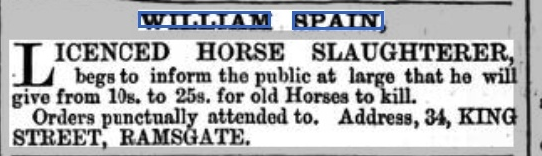
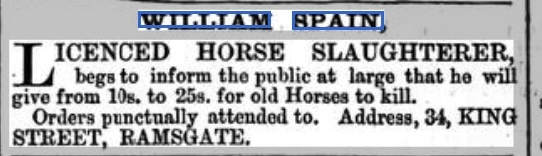
A horse-slaughterer had to have a licence and carry out his business in accordance with the law. This stated that no horse entering his yard must come out again alive, or as a horse. The knacker was supposed to cut off its mane on arrival (to spoil its value) and despatch it within 3 days.
The horse slaughterer often purchased old live and dead horses via a contract with brewers, coal- merchants or cab and omnibus yards, collecting the deceased animals on a special cart and tying the live ones behind. If the knacker found a young horse in bad condition among those purchased for slaughtering, he would rest it, feed it up and then put it into his own cart, sell it on or let it out to hire. Large profits could be made in this way.
Slaughtermen were said to reap large fortunes very rapidly, many retiring after a few years and taking large farms.
Sadly, horses were mistreated in order to squeeze the last bit of working value from them before their bodies, living or dead, went to the knacker’s yard. This attitude toward working horses is summed up by Anna Sewell, in Black Beauty...
“my business, my plan is to work 'em as long as they'll go, and then sell 'em for what they'll fetch, at the knacker's or elsewhere.”
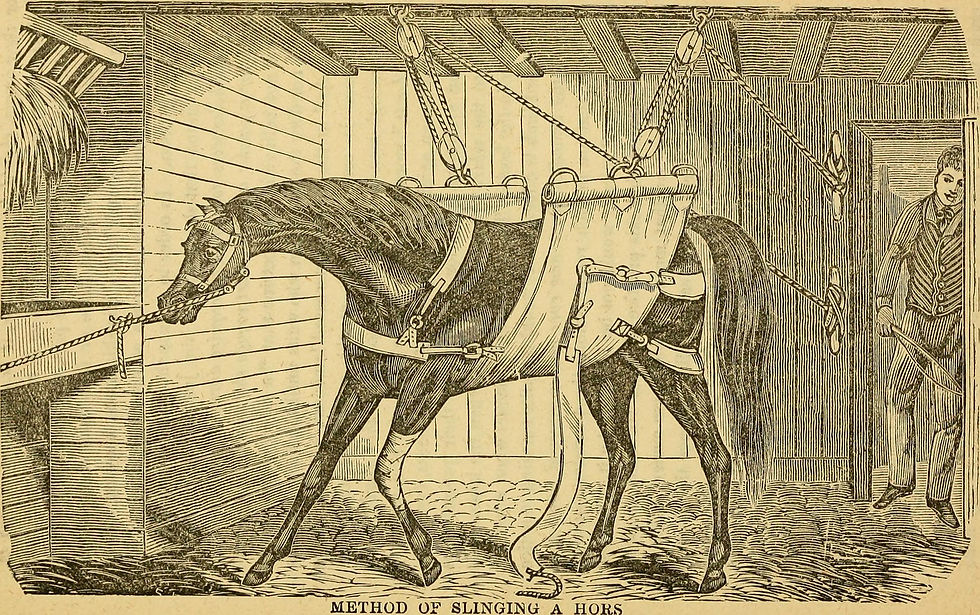
When a horse collapsed or met with an accident while working, a crowd would form in the street and the local knacker would be sent for to end its suffering - his cart was kept ready to be on the way in less than five minutes from receipt of a call to put a horse out of its misery.
At the slaughteryard, a shade was put over the animal's eyes so that it wouldn't see the slaughterman about to strike then a pole-axe was used to despatch it. The knowledge needed to effectively dismember the carcass into its constituent parts was gained by life-long practice, for the trade was hereditary. The skin and hoofs might go to glue-makers, the old shoes to the farrier's to be re-used, the tails and manes to be used in sofas, chairs, or fishing-lines and the hides to be used for carriage roofs and whip-lashes. The bones (or “racks”) were chopped up and boiled to extract the fat, which was used for greasing harness and the wheels of carts.
James Greenwood wrote about a visit to the pub next to a large London slaughteryard in 1874:
"They are terrible looking fellows, these honest horse slaughterers. They seem rather to cultivate than avoid stains of a crimson colour; and they may be seen at the bar of the public-house before-mentioned, merry as sandboys, haw-hawing in the true and original "fee-fo-fum" tone, drinking pots of beer with red hands and with faces that look as though they had been swept with a sanguinary hearth-broom."
Read more ...


Comments